


“`html
Digital Nomad Essentials 2026: The Ultimate AI-Powered Packing List
Remember when “digital nomad” simply meant carrying a heavy laptop and hunting for the nearest coffee shop with Wi-Fi? Thankfully, those days are long behind us. As we move deeper into 2026, the lifestyle has evolved from a rugged struggle for connectivity into a sleek, automated operation. We aren’t just surviving on the road anymore; we’re thriving. The modern nomad doesn’t just pack gear—they pack intelligent systems that anticipate needs, dissolve language barriers, and automate the friction of travel.
Whether you are a seasoned remote worker looking to upgrade your setup or a newbie preparing for your first extended trip, the right tech is the difference between burnout and bliss. We’ve moved beyond simple gadgets into the era of the AI co-pilot. In this guide, we’ll explore the cutting-edge hardware and software that will define the next generation of remote work. Let’s dive into the essentials that will turn your travel experience into a productivity paradise.
🖥️ The AI-Enhanced Workstation: Hardware That Thinks
Your laptop is no longer just a tool for typing; it is your central command, your office, and your entertainment hub, all rolled into one. In 2026, the specs have changed. It’s not just about CPU speed or RAM anymore—it’s about the NPU, or Neural Processing Unit. These specialized chips are designed specifically to handle machine learning tasks locally on your device. This means your laptop can run complex AI assistants without needing a constant cloud connection, keeping your data private and your speed lightning fast.
When shopping for your primary machine, we recommend looking for models with at least 40 TOPS (Trillion Operations Per Second) of NPU power. This ensures smooth real-time translation during video calls, instant background noise removal, and predictive text that actually learns your unique writing style. It’s the difference between a computer that follows orders and one that helps you think.
Adaptive Audio Technology
Sound is everything when you work in unpredictable environments. The latest generation of AI-powered noise-canceling headphones does more than just mute the world; they understand it. Using advanced sensors, these headphones analyze your environment in real-time.
- In a bustling café: They identify and isolate human speech frequencies, suppressing the clatter of cups and espresso machines while still letting you hear if a waiter calls your name.
- At the airport: They automatically switch modes to amplify gate announcements and PA system alerts while keeping the drone of travelers at bay.
- Confidential calls: Some premium models even detect when you are speaking and automatically mute your microphone if you turn your head away, ensuring your private conversations stay private—even in a crowded co-working space.
Portable AI Screens
For designers, developers, and writers, one screen is rarely enough. But carrying a bulky monitor is a pain. Enter rollable OLED monitors. These marvels of engineering fit into a cylinder the size of a travel umbrella but unfurl to a stunning 15-inch display. Our favorite feature? The pressure-sensitive AI sketchpad capability. You can draw rough diagrams on the screen, and the software instantly converts them into clean vectors or editable code blocks. It’s like having a studio in your backpack.
Ergonomic Intelligence
Long-haul travel wreaks havoc on your posture. In 2026, we fight back with smart ergonomics. Consider investing in a wearable posture corrector—a small device that clips to your collar. It provides gentle haptic feedback (a subtle vibration) whenever you slouch, training your muscles over time. Combine this with an AI-driven ergonomic mouse that tracks your hand movement intensity. If it detects you are gripping too hard during stressful deadlines, it subtly adjusts resistance to prevent repetitive strain injuries. Some devices even sync with your calendar to suggest micro-breaks based on your biometric stress levels, ensuring you stay productive without hitting the wall.
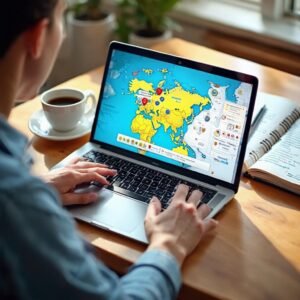
A futuristic workspace setup featuring a rollable screen and AI-integrated peripherals.
🌐 Unbreakable Connectivity: The Lifeline of a Nomad
Nothing kills a nomad’s vibe faster than a spinning loading wheel. Connectivity is your lifeline, and in 2026, we build redundancy into our systems. The goal isn’t just to find Wi-Fi; it’s to never notice when it fails. The foundation of this strategy is eSIM 2.0 technology. Unlike early eSIMs, these new apps act as intelligent network managers. They hold multiple data profiles simultaneously and automatically switch carriers based on real-time signal strength and cost. You cross a border, and your phone silently negotiates the best local data plan without you lifting a finger.
Satellite Communication Safety Net
For those who like to venture off the beaten path—digital nomads who prefer van life or remote cabins—cell service is never guaranteed. This is where satellite messengers like the Starlink Mini or Garmin inReach come in. They have shrunk to the size of a thick power bank but offer a lifeline to the world. They provide basic internet for checking emails, weather updates, and location sharing. In an emergency, the SOS functionality is a literal lifesaver. Having one of these in your bag means you can work from a mountaintop or a desert beach with total confidence.
The GaN Charging Revolution
Let’s talk about power bricks. Gone are the days of carrying a separate heavy charger for your laptop, camera, and phone. Gallium Nitride (GaN) technology has matured, allowing for 200W+ charging in adapters the size of a matchbox. These chargers run cooler and are vastly more efficient than traditional silicon bricks. The latest models feature smart power distribution. Plug in your laptop and phone, and the charger “talks” to both devices, prioritizing power to the laptop while trickle-charging your phone—exactly what you need when you are scrambling for an outlet at a busy airport.
Intelligent Power Banks
Your power bank should be as smart as your phone. The latest units integrate with your calendar. If they see you have a meeting in 30 minutes and your phone is low, they prioritize charging speed to the phone over the laptop. Some even feature small solar panels and link to local weather APIs to tell you, “Hey, it’s going to be cloudy for the next three hours, plug in now.” With capacities now reaching 30,000mAh, you can easily go days without finding a wall socket.
A streamlined packing layout featuring GaN chargers, satellite messengers, and smart power banks.
🤖 AI Travel Planning & Logistics: Your Digital Concierge
Logistics used to eat up hours of our week. Comparing flights, checking visa requirements, and finding hotels with reliable Wi-Fi was a part-time job in itself. In 2026, AI has taken over the drudgery. Modern itinerary builders act like a personal travel agent who knows you better than you know yourself. You simply input your parameters—say, “3 weeks in Southeast Asia, budget of $2000, need high-speed Wi-Fi for 4 hours a day, and love street food”—and the AI generates a minute-by-minute itinerary.
It factors in transit times, jet lag recovery, and even local holidays that might shut down attractions. It doesn’t just plan; it optimizes for your happiness and productivity.
Seamless Booking Intelligence
Finding a “work-friendly” hotel used to be a gamble. You’d look at photos and hope the desk was sturdy. Now, booking platforms use verified data metrics. Trip.com Hotels, for example, now offers advanced filters that go beyond amenities. You can sort by “Digital Nomad Score,” which aggregates data on Wi-Fi upload speeds (crucial for creators), noise levels, and the availability of dedicated workspaces. Some platforms even use AI to analyze reviews to ensure that the “quiet” room actually is quiet.
Real-Time Transfer Optimization
One of the most stressful aspects of travel is the airport transfer. Will the driver be there? What if my flight is late? AI-booking services have solved this. When you book through Trip.com Transfers, the system actively tracks your flight. If your plane is delayed by two hours, your driver is automatically notified, and your pickup time is pushed back. You receive updates on your phone, removing the anxiety of missed connections or waiting curbside with heavy bags.
Experience Curation
Work hard, play hard is the nomad motto. But finding fun things to do in a new city can be overwhelming. AI tools now curate hyper-local experiences based on your specific interests. If you love photography, the AI will suggest the “golden hour” spots that aren’t swarming with tourists. If you are into networking, it will highlight co-working meetups or tech talks happening in the city that align with your language and skills. It’s like having a local friend in every city you visit.
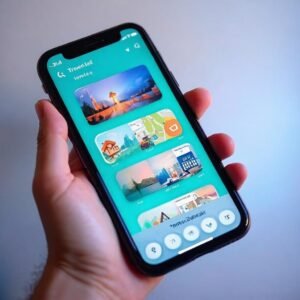
A traveler using a mobile app to navigate a new city with augmented reality directions.
🧘 Health & Wellness in the Digital Age: Staying Balanced on the Road
The greatest asset you have as a digital nomad is your health. The constant change of time zones, climates, and diets can take a severe toll. In 2026, we use AI to maintain biological homeostasis. Wellness apps are no longer just step counters; they are proactive health coaches. They sync with your smartwatch to analyze your heart rate variability (HRV) and sleep quality. If they detect that your body is struggling to adapt to a new time zone, they will automatically suggest adjusting your work schedule or recommend light exposure times to reset your circadian rhythm.
Mental Health Support
Loneliness is the silent epidemic of the nomad lifestyle. Being away from family and friends can be isolating. AI mental health tools have become incredibly sophisticated, offering 24/7 conversational support that feels surprisingly human. They can detect signs of burnout by analyzing your calendar density and communication patterns. If you haven’t taken a day off in 12 days, the AI might gently suggest a break. Furthermore, these apps can connect you with local therapists via telehealth platforms, offering real-time translation so you can speak to a professional in your native tongue, no matter where you are.
Nutrition Intelligence
Eating healthy while traveling is difficult, especially when you don’t speak the language. New nutrition apps use your camera to scan menus, translating dishes and flagging ingredients that match your dietary restrictions (gluten-free, vegan, low-sugar). But they go a step further by analyzing the nutritional density. If you have a heavy coding session scheduled for the afternoon, the app might recommend a complex-carb-heavy lunch to sustain your energy levels and prevent that dreaded post-lunch slump.
Environmental Adaptation
Your environment dictates how you feel. Smart wearables now monitor air quality, pollen counts, and UV index in real-time. If you are in a city with high pollution, your app might suggest an indoor workout or a route through a park. For those in extreme climates, smart clothing is becoming mainstream—fabrics that actively regulate temperature or change their thermal properties based on the weather. Hydration is also tracked intelligently; smart water bottles sync with local weather data to remind you to drink more water if it’s hot or humid, keeping your brain fog-free.
A peaceful moment of wellness in nature, utilizing smart wearables to track health metrics.
🔒 Smart Security: Protecting Your Digital Life
As we rely more on AI and cloud services, security becomes paramount. Nomads are prime targets for digital theft because we often use public networks. In 2026, basic antivirus isn’t enough. You need an AI-driven security suite for your devices. These tools monitor your network traffic for anomalies in real-time. If a coffee shop’s Wi-Fi tries to execute a “man-in-the-middle” attack, the AI kills the connection instantly before your data is compromised.
Additionally, consider biometric hardware. USB keys that require your fingerprint to authorize access to your banking sites or email add a layer of physical security that software alone can’t match. With these tools, you can work from anywhere knowing your digital fortress is secure.
“`