




🎒 Why Smart Packing Saves You Money
Packing isn’t just about fitting everything into your suitcase—it’s about avoiding unnecessary expenses and maximizing your travel budget. Every budget traveler knows that baggage fees, overweight charges, and forgotten essentials can quickly drain your wallet. By mastering these 10 essential packing hacks, you’ll not only save space but also keep more money in your pocket for experiences that matter. The art of smart packing transforms how you travel, giving you the freedom to move between destinations without the hassle of heavy luggage or unexpected costs.
Think about it: each checked bag on most airlines costs $30-60 each way. For a round-trip journey with one checked bag, that’s $60-120 you could spend on local food, attractions, or accommodation. Budget airlines like Ryanair and Spirit charge even more for carry-on bags that exceed their strict size limits. By learning to pack efficiently, you can avoid these fees entirely and stick to just a carry-on bag that meets airline requirements. This not only saves money but also eliminates the stress of waiting at baggage claim and the risk of lost luggage. Smart packing is truly the foundation of budget travel success.
The beauty of these packing hacks is that they work together synergistically. Use compression bags to save space, and you’ll have room for that extra outfit or souvenir you didn’t plan for. Pack versatile clothing items, and you’ll need fewer clothes overall. Bring multi-purpose items, and you can leave behind specialized gear that takes up valuable room. Each hack builds on the others, creating a packing system that’s both efficient and economical. These strategies have been tested by veteran backpackers, digital nomads, and budget travelers who’ve learned through trial and error what works best. Now you can benefit from their experience and start your own journey toward smarter, cheaper travel.
🧊 Roll, Don’t Fold: The Space-Saving Game Changer
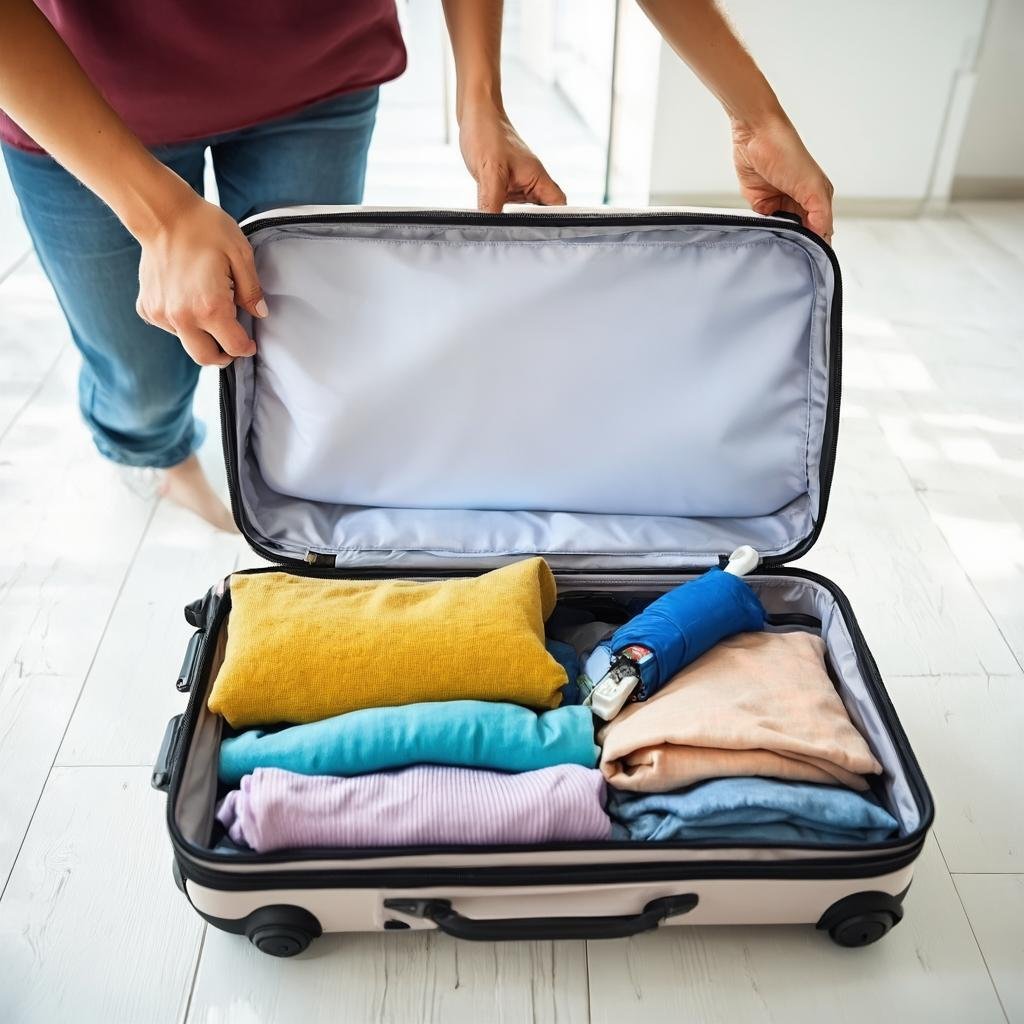
The oldest trick in the book remains one of the most effective: rolling your clothes instead of folding them. This simple technique can increase your packing capacity by up to 30%, giving you significantly more space without needing a larger bag. When you fold clothes, you create rigid blocks with empty spaces between them. Rolling compresses the fabric and fills those gaps, creating a more compact and flexible packing arrangement. This method works particularly well for t-shirts, casual pants, and lightweight fabrics that don’t wrinkle easily. For bulkier items like sweaters or jeans, consider a hybrid approach: fold them in half lengthwise, then roll from the bottom up.
Rolling also makes it easier to see what you’ve packed and find specific items without disrupting your entire suitcase. Instead of digging through layers of folded clothes, you can simply glance at the rolled items and grab what you need. This organization saves time and reduces the likelihood of overpacking “just in case” items because you can see exactly what you have. Another bonus: rolled clothes tend to wrinkle less than folded ones because there are fewer sharp creases. For delicate fabrics or formal wear, you might still need to fold certain items, but for the majority of your travel wardrobe, rolling is the way to go. Combine this technique with packing cubes (hack #4) for maximum organization and efficiency.
Here’s how to roll like a pro: lay the item flat, smooth out any wrinkles, fold sleeves in for shirts or legs in for pants, then roll tightly from one end to the other. The tighter the roll, the more space you’ll save. For t-shirts, roll from the bottom up. For pants, start from the waistband down. Practice this technique at home before your trip—you’ll be amazed at how much more you can fit in your suitcase. If you’re traveling with multiple people, color-code your rolled items or use different colored packing cubes to keep everyone’s belongings separate. This rolling method works for everything from socks and underwear to jackets and dresses, making it one of the most versatile packing hacks in your arsenal. Master this technique first, and you’ll already be halfway to packing like a pro.
📦 Compression Bags: Shrink Your Wardrobe by Half
Compression bags are a budget traveler’s secret weapon for maximizing space and keeping belongings organized. These clear plastic bags have one-way valves that let you squeeze out excess air, reducing the volume of your clothes by up to 50%. Think about what that means: you could pack twice as much in the same space, or reduce your suitcase size and avoid checked bag fees entirely. Compression bags work especially well for bulky items like winter jackets, sweaters, and fluffy bedding. They’re also perfect for dirty laundry on your return trip—compress your soiled clothes to make room for souvenirs or shopping. The best part? These bags are incredibly affordable, typically costing $10-20 for a set of multiple sizes.
There are two types of compression bags: manual and vacuum-sealed. Manual compression bags work by rolling or pressing the air out through a one-way valve—no vacuum cleaner needed. These are perfect for travel because you can use them anywhere, anytime. Vacuum-sealed bags require a vacuum cleaner or handheld pump to remove air, which is less convenient on the road but can achieve slightly better compression. For most travelers, manual compression bags strike the perfect balance between effectiveness and portability. Look for durable, puncture-resistant bags that won’t tear when you’re squeezing the air out. Clear bags are essential so you can see what’s inside without opening them.
Compression bags serve another crucial purpose: they keep your belongings organized and protected from moisture. Separate your clothes by type (tops, bottoms, underwear) into different compression bags, and you’ll always know where to find what you need. They also create a barrier against spills or rain—if your bottle of shampoo leaks in your main bag, your clothes stay dry in their compression bags. For budget travelers staying in hostels or budget hotels where storage might be limited, compression bags make it easy to pack and unpack quickly. Simply compress your clothes into the bags, toss them in a locker or under the bed, and they stay organized and compact until you need them again. This organization hack alone can save you valuable time and stress throughout your trip.
📋 Packing Cubes: The Ultimate Organizational Tool
If there’s one packing hack that transforms the travel experience, it’s packing cubes. These zippered fabric organizers come in various sizes and colors, allowing you to compartmentalize your suitcase into logical sections. Instead of digging through a jumbled mess of clothes every time you need something, you simply unzip the relevant cube and grab what you need. This organization saves countless hours over the course of a trip and reduces the likelihood of leaving items behind in hotel rooms. Packing cubes also compress your clothes slightly, creating more space and preventing items from shifting during transit. They’re particularly useful for families—assign each family member their own color-coded cubes, and managing luggage becomes infinitely easier.
The strategic use of packing cubes follows a simple system: one cube for tops, one for bottoms, one for underwear and socks, and one for miscellaneous items. For longer trips, you might add a cube for toiletries or electronics. This system makes packing and unpacking a breeze because each cube has a designated home in your suitcase. When you arrive at a destination, simply transfer the cubes to drawers or shelves—no need to unpack each item individually. For accommodations without adequate storage, you can leave items in the cubes and access them as needed. This modular approach to packing means you’re always organized, whether you’re staying five nights in one place or moving between destinations daily.
Packing cubes also help prevent overpacking by creating a physical limit for each category of clothing. When the tops cube is full, you know you have enough shirts—you don’t need to add more. This visual boundary helps curb the “just in case” impulse that leads to overpacking. Budget travelers love packing cubes because they extend the life of clothes by reducing wrinkles and making it easier to keep clean and dirty items separate. Many packing cubes are also water-resistant, providing an extra layer of protection for your belongings. Look for lightweight, breathable cubes that won’t add unnecessary weight to your luggage. Some sets include a laundry bag—perfect for separating soiled clothes from fresh ones as you travel. Invest in a quality set of packing cubes, and you’ll wonder how you ever traveled without them.
🎽 Pack Versatile, Neutral-Colored Clothing
The key to packing light while maintaining style is choosing versatile, neutral-colored clothing that can be mixed and matched effortlessly. Instead of packing statement pieces that only work with one or two outfits, focus on a capsule wardrobe of basics that coordinate with each other. Neutral colors like black, white, gray, navy, and khaki form the foundation of this system—they go with everything and can be dressed up or down with accessories. This approach allows you to create dozens of outfit combinations from just a few core pieces, dramatically reducing the number of clothes you need to pack. For a one-week trip, you might pack three tops, two bottoms, and one jacket that all work together—giving you at least six different outfits from minimal items.
Choose fabrics that are lightweight, quick-drying, and wrinkle-resistant for maximum versatility. Merino wool, synthetic blends, and certain treated cottons resist odors and stains, allowing you to wear items multiple times between washes. This is especially important for budget travelers who might not have access to laundry facilities or want to avoid expensive hotel laundry services. Pack pieces that work for multiple settings—pants that are comfortable enough for sightseeing but stylish enough for dinner, or a dress that can be casual with sandals or dressy with heels. The more versatile each item is, the fewer total items you’ll need. This principle applies to footwear too—one or two pairs of shoes that work for all occasions beats packing five different pairs.
Layering is another essential strategy for versatile packing. Instead of packing heavy winter clothes, bring lightweight layers that can be combined for warmth. A t-shirt, light sweater, and waterproof jacket can replace a heavy coat while offering more flexibility for changing weather conditions. This approach saves space and weight in your luggage while ensuring you’re prepared for various climates. When selecting items, ask yourself: “Can I wear this in at least three different situations?” If the answer is no, leave it behind. The goal is to pack items that pull double or triple duty, maximizing value for the space they occupy. Building this capsule wardrobe takes some initial thought, but once you have your system down, packing becomes quick and stress-free. Remember: less is often more when it comes to travel clothing.
🧴 Solid Toiletries and Reusable Containers
Liquids are the enemy of efficient packing— they’re heavy, prone to leaking, and subject to strict airline security regulations. The solution? Switch to solid toiletries and decant liquids into reusable containers. Solid shampoo bars, conditioner bars, and solid soap bars take up a fraction of the space of their liquid counterparts, last longer, and never spill. A single shampoo bar can replace 3-4 bottles of liquid shampoo, saving significant weight and space in your toiletry bag. Many companies now make solid versions of deodorant, toothpaste, lotion, and even sunscreen, allowing you to eliminate liquid containers almost entirely. These products are also environmentally friendly, reducing plastic waste—a bonus for eco-conscious travelers.
For items that must remain liquid—like certain medications, contact lens solution, or specific skincare products—transfer them into reusable travel-size containers instead of buying travel-size bottles every trip. TSA-compliant containers under 3.4 ounces (100ml) are widely available at drugstores and online. Label each container clearly to avoid confusion, and consider using different colored containers or a labeling system to quickly identify contents. Silicone squeeze tubes are especially useful because you can squeeze out every last drop, minimizing waste. Store all liquid containers in a clear, zippered bag as required by airport security, but choose a durable, reusable bag rather than disposable ones. This keeps everything organized and prevents leaks from spreading to the rest of your luggage.
The space savings from switching to solids and reusable containers add up quickly. A typical toiletry kit might weigh 2-3 pounds with liquid products, but the same functionality can be achieved in under 1 pound with solid alternatives and smart containers. That’s 1-2 pounds of weight you can use for other items or simply eliminate to stay under airline weight limits. Budget travelers appreciate the cost savings too—solid bars often last longer than liquid products, saving money over time. Before your trip, test any new products to ensure they work for your hair and skin type. Once you find products you love, you’ll wonder why you ever lugged around heavy bottles of shampoo and conditioner. This packing hack is space-saving, money-saving, and hassle-free—the holy trinity of smart travel.
🔌 Multi-Purpose Items and Dual-Function Gear
Every item you pack should earn its keep by serving multiple functions. The secret weapon of seasoned budget travelers is gear that does double or triple duty, reducing the total number of items needed. A scarf, for example, can serve as a blanket on cold flights, a pillow case in budget hostels, sun protection at the beach, a makeshift bag for shopping, and even a fashion accessory. This single item replaces five separate ones, saving significant space and weight. The same principle applies throughout your packing list—look for opportunities to combine functions and eliminate single-purpose items.
Start with technology: a smartphone can replace a camera, GPS device, flashlight, alarm clock, music player, and even a laptop for basic tasks. A tablet with a keyboard can serve as both an entertainment device and a lightweight work tool. Power banks with built-in flashlights or solar charging capabilities add functionality without extra items. For clothing, convertible pants that zip into shorts are a classic dual-function piece. A lightweight jacket that packs into its own pocket serves as both outerwear and a compact travel pillow. A sarong or large scarf works as beach cover-up, towel, curtain, sunshade, and more. The key is thinking creatively about how each item might serve multiple purposes during your trip.
Even small items can pull double duty. A safety pin can secure zippers, act as an emergency button replacement, or pick locks (in emergencies). Dental floss doubles as strong thread for repairs or makeshift clotheslines. Ziploc bags protect electronics from water, store snacks, organize cables, and keep wet items separate from dry ones. Before packing any item, ask yourself: “What else can this be used for?” If you can’t think of at least one alternative use, consider whether it’s truly essential. This mindset shift dramatically reduces what you need to pack while ensuring every item provides maximum value. Multi-purpose packing isn’t just about saving space—it’s about being resourceful and prepared for whatever travel throws your way.
📱 Use Your ToTourist App for Smart Planning
The ultimate packing hack is using technology to plan smarter, not harder. The ToTourist app doesn’t just help you plan your itinerary—it also generates personalized packing lists based on your destination, trip length, and activities. Instead of relying on generic checklists or trying to remember everything yourself, let AI do the heavy lifting. Simply input your travel details, and ToTourist creates a comprehensive packing list tailored to your specific needs. Traveling to a cold climate? The app reminds you to pack layers and warm accessories. Going on a beach vacation? Don’t forget sunscreen and swimwear. This personalized approach ensures you pack exactly what you need—no more, no less.
What makes ToTourist’s packing lists truly powerful is their integration with your complete travel plan. The app knows what activities you’ve scheduled, the weather forecast for your destination, and the specific requirements of your accommodations. Visiting temples that require modest dress? The packing list includes appropriate clothing. Staying somewhere without laundry facilities? ToTourist suggests packing enough clothes for your entire trip. This level of customization simply isn’t possible with generic packing checklists. The app also learns from your preferences over time, refining its recommendations based on your feedback. If you consistently mark certain items as unnecessary, ToTourist stops suggesting them. If you find yourself needing unexpected items, the app remembers for future trips.
Beyond packing lists, ToTourist helps you pack smarter by connecting you with affordable flights, budget-friendly hotels, and local experiences that align with your interests. Better planning leads to better packing because you know exactly what to expect. When you book through Trip.com via ToTourist, you often get access to exclusive deals that stretch your travel budget even further. The app also tracks your travel memories and preferences, creating a personalized travel profile that improves every trip. Download ToTourist today and transform how you plan and pack for travel—because smart travelers don’t just pack, they plan.
✅ Quick Packing Checklist Before You Go
Before zipping up your suitcase, run through this final checklist to ensure you haven’t missed anything critical. First, verify that all liquids are in containers under 3.4 ounces and stored in a clear, sealable bag for airport security. Make sure you have access to essentials in your carry-on, including medications, a change of clothes, and valuables. Check that all electronics are fully charged and that you’ve packed chargers and adapters for your destination. Test your packing by lifting your bag—if it feels uncomfortably heavy, remove non-essential items until it’s manageable. Remember, you’ll be lifting your bag into overhead bins or carrying it up stairs, so pack with your physical limitations in mind.
Next, do a mental walkthrough of your trip day by day. Does your packing list cover every planned activity? Do you have appropriate clothing for all weather conditions you might encounter? Are essential documents easily accessible? This exercise often reveals overlooked items—sunscreen for beach trips, warm layers for mountain excursions, rain gear for tropical destinations. Check that you’ve packed items that make your travel more comfortable: eye mask and earplugs for flights, a portable charger for long days of sightseeing, a reusable water bottle to save money on drinks. These small additions make a big difference in your overall travel experience.
Finally, weigh your bag against airline limits. Most airlines allow 22 pounds (10kg) for carry-on and 50 pounds (23kg) for checked bags. Budget airlines often have stricter limits, so verify the specific requirements for your flights. If you’re close to the limit, remove non-essential items or redistribute weight between bags. Remember that checked bag fees can be as much as $100 per bag each way on some carriers—staying within limits is a smart financial decision. Once everything checks out, do a final organization check: are your packing cubes zipped, are compression bags sealed, is everything secured so it won’t shift during transit? With these final checks complete, you’re ready to travel light, travel smart, and travel within budget.
Packing efficiently is an art form that improves with practice. Start implementing these hacks on your next trip, and you’ll immediately notice the difference—less stress, lower costs, and more freedom to focus on what matters: the journey itself. Happy travels!